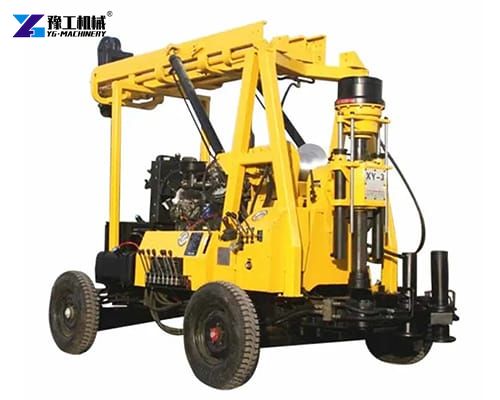
RC drilling machine, known in full as a reverse circulation drilling rig, is a sophisticated percussion system designed for rapid and efficient subsurface sampling. The RC method is all about speed and sample quality in specific geological formations. It is the workhorse of mineral exploration, water well drilling, and geotechnical investigations, prized for its ability to deliver large sample volumes quickly and cost-effectively. It is designed to extract rock samples from the subsurface using a dual-wall drill pipe system, employsingcompressed air to forcefully eject pulverized rock fragments upward through an inner tube. This process ensures minimal contamination, rapid sample collection, and the ability to drill deeper into hard rock formations. The reverse circulation drilling machine combines power with precision. It is widely used in mineral exploration, water well drilling, geotechnical investigations, and large-scale construction projects.
Features of RC Drilling Machine
- Dual-Walled Drill Rods: The core feature of RC drilling is its dual-pipe design. The outer tube drives compressed air downward, while the inner tube carries the rock chips upward to the surface.
- Sample Recovery System: Provides dry, uncontaminated samples, which are critical in geological exploration.
- Heavy-Duty Structure: Built with robust steel frames and reliable engines to endure harsh field conditions.
- Automation and Control Systems: Many modern reverse circulation drilling machines are equipped with computerized monitoring systems for real-time data.
- Mobility Options: Available in truck-mounted, crawler-mounted, and skid-mounted versions for different terrains.
Components of Reverse Circulation Drilling Machine
An RC drilling machine consists of several essential parts:
- Drill Rig Base: Mounted on a truck, crawler, or skid frame for mobility.
- Drill Rods: Dual-walled rods forming the core of the RC drilling system.
- Drill Bit: Specialized bits designed to cut through hard rock and soil formations.
- Mud or Dust Suppression System: Reduces environmental hazards during drilling.
- Engine and Hydraulic System: Provides power and control for the drilling process.
Advantages Why Industry Chooses RC Drilling
- Superior Sample Quality: The sealed inner tube retrieval system is the gold standard for preventing cross-contamination. This provides geologists with high-integrity samples, leading to more reliable data for resource estimation.
- Blazing Speed: RC drilling machine is notoriously fast. The powerful hammer action and efficient cuttings removal allow them to advance through hard rock formations much quicker than many other drilling methods. This speed translates directly into reduced project timelines and lower costs.
- Cost-Effectiveness: While the initial investment in an RC rig is significant, the operational costs per meter drilled are often lower due to the high penetration rates and reduced time on site. It is a solution that offers an excellent return on investment for large-scale exploration programs.
- Large Sample Volume: The process delivers a large, consistent volume of cuttings, providing ample material for detailed assay and metallurgical testing.
Applications of Reverse Circulation Drilling Equipment
- Mineral Exploration
RC drilling is the backbone of grade control in open-pit mines. By delineating ore boundaries with precision, it helps optimize blasting patterns and reduce waste rock extraction. - Geotechnical Engineering
Before constructing dams, tunnels, or skyscrapers, engineers rely on RC drilling to assess soil stability and rock strength. The method’s ability to penetrate hard strata provides critical data for foundation design and risk mitigation. - Environmental Investigations
When monitoring groundwater contamination or soil pollution, the RC drilling machine offers a contamination-free alternative to rotary drilling. Their dry cuttings are easier to handle and analyze, ensuring accurate environmental impact assessments.