
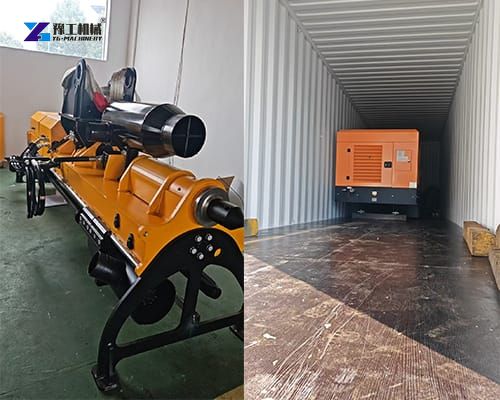
Integrated rock drill and splitter combines two operations that are often handled by separate attachments: drilling a controlled hole and applying hydraulic splitting force to fracture hard rock. For contractors working in quarries, foundations, trench excavation, road construction, or restricted sites, this configuration can reduce attachment changes and make the rock-removal sequence easier to organize. There are mainly three models: YG-130, YG-152, and YG-210. They are designed for 20T–36T, 36T–48T, and 48T–65T excavators, respectively. The machine uses an excavator as its hydraulic power platform and combines drilling, splitting, and piling-related functions in one working system.
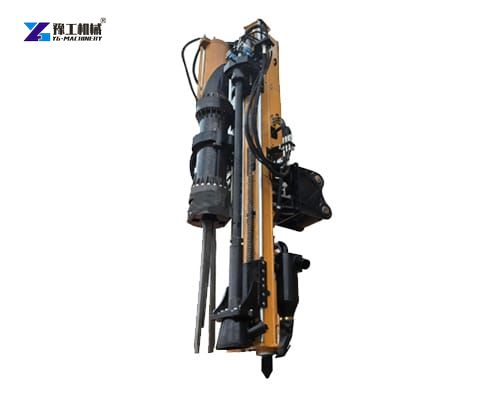
Integrated Rock Drill and Splitter Specifications
| Model | YG-130 | YG-152 | YG-210 |
| Suitable Excavator | 20T-36T Excavator | 36T-48T Excavator | 48T-65T Excavator |
| Maximum Horizontal Splitting Height | 9475mm | 9985mm | 10680mm |
| Maximum Vertical Splitting Height | 6715mm | 6905mm | 6770mm |
| Maximum Splitting Depth | 6705mm | 7025mm | 8050mm |
| Maximum Splitting Distance | 10225mm | 10875mm | 11640mm |
| Pilling Beam Length | 3875mm | 4850mm | 5525mm |
| Drilling Advance Stroke | 2000mm | 2600mm | 3500mm |
| Maximum Drilling Thrust Force | 50KN | 50KN | 50KN |
| Maximum Drilling Pull Force | 32KN | 32KN | 32KN |
| Piling Advance Stroke | 1500mm | 1800mm | 2300mm |
| Maximum Piling Thrust Force | 160KN | 160KN | 160KN |
| Maximum Piling Full Force | 100KN | 100KN | 100KN |
| Hydraulic Pressure | Max. 35Mpa | Max. 35Mpa | Max. 35Mpa |
| Hydraulic Flow | Min. 240L/min | Min. 240L/min | Min. 240L/min |
| Weight | 4200kg | 6200kg | 8300kg |
| Dimensions | 4210*1400*1785mm | 5270*1485*1840mm | 5810*1485*1840mm |
| Operation Mode | Remote Control | Remote Control | Remote Control |
Configuration Highlights of Excavator Rock Drill and Splitter
Hydraulic system: Integrated rock drill and splitter rated for max 35Mpa working pressure, paired with a maximum 240L/min hydraulic flow to match the full power output of compatible excavators
Force rating: 50KN maximum drilling thrust, 32KN maximum drilling pull force, and 100KN full splitting force to handle rock with compressive strength up to 150MPa
Piling thrust: 160KN maximum piling thrust to support auxiliary piling operations on mixed ground conditions
Operation mode: Full remote control functionality, allowing operators to stand at a safe distance away from unstable rock faces while controlling all drilling and splitting actions
Structural material: High-tensile alloy steel frame with precision-machined wedge components, heat-treated to resist wear even after thousands of splitting cycles
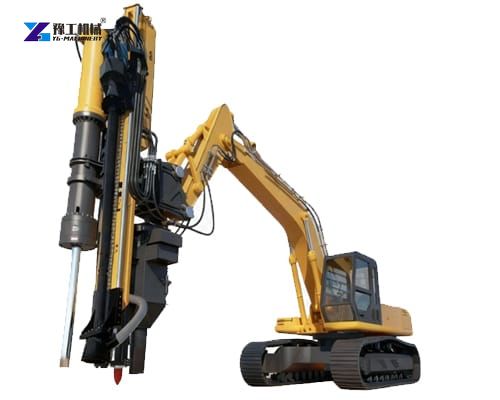
How Does the Hydraulic Rock Drill and Splitter Work?
The operating sequence starts with carrier positioning. The excavator should be placed on stable ground, with the boom and attachment aligned with the target rock zone.
The drilling system then creates holes according to the required splitting pattern. Hole depth and spacing should be selected according to the rock formation, required fragment size and site conditions. Massive rock may allow a regular pattern, while fractured or layered formations often require a different layout.
After drilling, the splitting system is positioned at the prepared holes. Hydraulic force is applied to initiate cracks and progressively separate the rock. Instead of depending solely on impact energy, the process uses prepared holes and the natural fracture behavior of the material.
Once the rock is separated, the excavator can remove the fragments or reposition for the next drilling cycle. Actual productivity depends on drilling speed, repositioning time, hole pattern, splitting response and material handling.
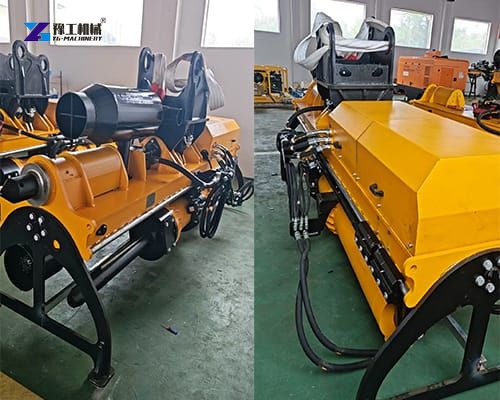
Core Technical Advantages of the Integrated Rock Drill and Splitter
1. Drilling and splitting in one working system
The main advantage is process integration. Operators can position the attachment, drill holes, and perform controlled rock splitting without bringing a separate drilling rig to the work area.
This can be especially valuable on confined construction sites where equipment access is limited.
2. Controlled rock removal
Rock splitting is different from impact breaking. Rather than repeatedly striking the rock, the splitting process uses drilled holes and hydraulic force to create fractures along a planned direction.
This makes the system suitable for projects where the contractor needs more predictable fracture control.
3. Excavator-mounted configuration
The attachment is designed around excavator classes rather than requiring a dedicated carrier. The specified models cover 20–65T excavators, allowing contractors to select the machine according to carrier capacity and project scale.
Hydraulic pressure is listed at a maximum of 35 MPa, while the hydraulic flow requirement is specified at a minimum of 240 L/min. These parameters should be checked against the actual excavator before purchase.
4. Remote control operation
All three models are specified with remote control operation. This can give the operator greater flexibility when working around fractured rock, excavation faces, trenches, or other areas where maintaining a safe operating position is important.
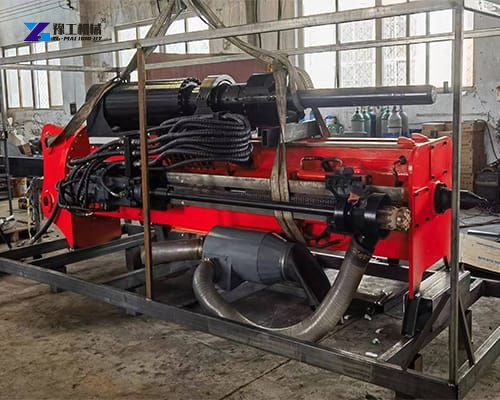
Industry Application Scenarios
This integrated rock drill and splitter solves real pain points across a wide range of project types:
Urban foundation pit excavation: Works safely near underground utility lines, subway tunnels, and existing residential buildings where blasting is strictly prohibited
Mining and quarrying: Ideal for dimension stone quarrying of granite, marble, and sandstone, producing neat, low-waste rock blocks with minimal secondary breakage
Road widening and slope trimming: Clears hard rock along existing highway slopes without damaging the intact road structure
Tunnel and confined space excavation: Suitable for small-section tunnel projects where large drilling rigs cannot maneuver
Concrete structure demolition: Breaks reinforced concrete foundations, bridge piers, and old building bases without producing dangerous flying debris
FAQ for the Rock Drill and Splitter
Q1: What excavator is suitable for an integrated rock drill and splitter?
The YG-130 is specified for 20–36T excavators, YG-152 for 36–48T excavators, and YG-210 for 48–65T excavators. Hydraulic flow and pressure should also be verified before installation.
Q2: What hydraulic flow does the system require?
The specification lists a minimum hydraulic flow of 240 L/min and maximum hydraulic pressure of 35 MPa. The excavator’s actual hydraulic circuit should be checked for compatibility.
Q3: What is the maximum drilling thrust?
The listed maximum drilling thrust force is 50 kN for all three models. Maximum drilling pull force is 32 kN.
Q4: Which model provides the greatest splitting depth?
The YG-210 has the greatest listed maximum splitting depth at 8,050 mm, compared with 7,025 mm for the YG-152 and 6,705 mm for the YG-130.
Q5: How should a buyer choose the right model?
Start with the excavator specifications, then evaluate rock hardness, required drilling depth, working height, splitting distance, access restrictions, and expected production rate. Matching the attachment to the carrier is more important than selecting a model based only on maximum force.
Find a Suitable Rock Drill and Splitter for Your Excavators
An integrated rock drill and splitter is designed for those who need a combined drilling and controlled rock-breaking solution rather than a conventional impact-only attachment. The YG-130, YG-152, and YG-210 cover excavators from 20 to 65 tons and provide progressively larger drilling strokes and working envelopes.
Confirm excavator hydraulic flow and pressure, carrier size, attachment weight, required drilling depth, rock conditions, and site restrictions before purchase. When these factors are correctly matched, an integrated drilling and splitting system can provide a practical approach to controlled rock excavation across construction, foundation, infrastructure, trenching, and other demanding projects. Are you looking for this machine for your excavators? Get in touch with us for more details.