
Excavator rock drill and splitter is a specialized attachment designed to help excavators handle demanding rock excavation, splitting, drilling, and foundation preparation tasks. By combining drilling and rock-splitting capabilities, this equipment provides contractors with a practical alternative to conventional excavation methods when working in hard rock, concrete, and other difficult materials. Available in multiple models for different excavator sizes, the equipment can be selected according to project requirements, working depth, required splitting force, and excavator capacity. Its remote-control operation also allows operators to manage the equipment conveniently while maintaining a suitable working position.
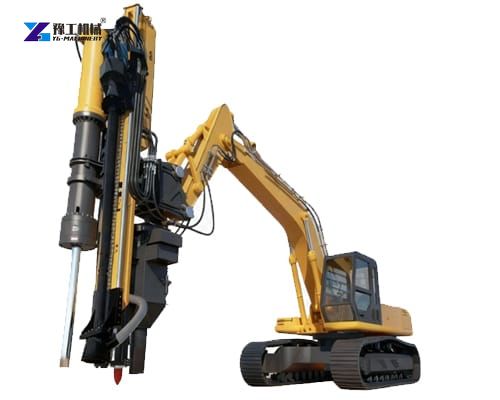
Specifications of Excavator Rock Drill and Splitter
| Model | YG-130 | YG-152 | YG-210 |
| Suitable Excavator | 20T-36T Excavator | 36T-48T Excavator | 48T-65T Excavator |
| Maximum Horizontal Splitting Height | 9475mm | 9985mm | 10680mm |
| Maximum Vertical Splitting Height | 6715mm | 6905mm | 6770mm |
| Maximum Splitting Depth | 6705mm | 7025mm | 8050mm |
| Maximum Splitting Distance | 10225mm | 10875mm | 11640mm |
| Pilling Beam Length | 3875mm | 4850mm | 5525mm |
| Drilling Advance Stroke | 2000mm | 2600mm | 3500mm |
| Maximum Drilling Thrust Force | 50KN | 50KN | 50KN |
| Maximum Drilling Pull Force | 32KN | 32KN | 32KN |
| Piling Advance Stroke | 1500mm | 1800mm | 2300mm |
| Maximum Piling Thrust Force | 160KN | 160KN | 160KN |
| Maximum Piling Full Force | 100KN | 100KN | 100KN |
| Hydraulic Pressure | Max. 35Mpa | Max. 35Mpa | Max. 35Mpa |
| Hydraulic Flow | Min. 240L/min | Min. 240L/min | Min. 240L/min |
| Weight | 4200kg | 6200kg | 8300kg |
| Dimensions | 4210*1400*1785mm | 5270*1485*1840mm | 5810*1485*1840mm |
| Operation Mode | Remote Control | Remote Control | Remote Control |
How Does the Excavator Rock Drill and Splitter Work?
The drilling stage prepares the rock for controlled separation. Depending on the project, operators can position the attachment at the required location and create drilling points according to the desired breaking pattern.
After drilling, the splitting function applies hydraulic force to the prepared area. Instead of simply pulverizing the material, the process is intended to create controlled fractures that divide the rock into smaller sections.
This working method can be particularly useful when contractors need to maintain better control over the excavation area. It can also help reduce unnecessary disturbance around the working zone compared with less controlled rock-breaking approaches.
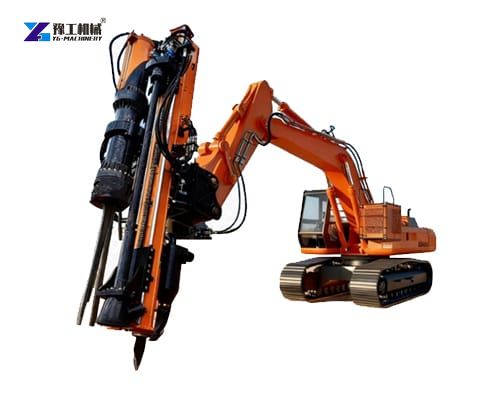
Features for Professional Excavation
Integrated Drilling and Splitting Capability
One of the main advantages of this excavator rock drill and splitter is its combined functionality. Drilling and splitting can be handled as part of the same equipment solution, reducing the need to coordinate multiple specialized machines for certain projects.
Strong Hydraulic Performance
The attachment is engineered around a hydraulic operating system suitable for excavator applications. The available models provide maximum hydraulic pressure of up to 35 MPa and hydraulic flow requirements starting from 240 L/min, allowing contractors to match the equipment with appropriately sized excavators.
Multiple Model Options
The product range includes the YG-130, YG-152, and YG-210 models. They are designed for different excavator categories, covering approximately 20–65 ton excavator applications across the range.
This model selection makes it easier for contractors to choose equipment according to the size of their excavator and the requirements of the project rather than relying on a single attachment configuration.
Remote-Controlled Operation
Remote control is included across the product range. This can provide operators with greater flexibility during drilling and splitting work, especially where direct positioning around the attachment is inconvenient or where a more suitable operating distance is preferred.
High Splitting Force
The equipment is designed for demanding rock-breaking applications, with a maximum splitting force of 160 kN in the listed models. The combination of drilling preparation and hydraulic splitting allows the operator to approach difficult material in a controlled sequence.
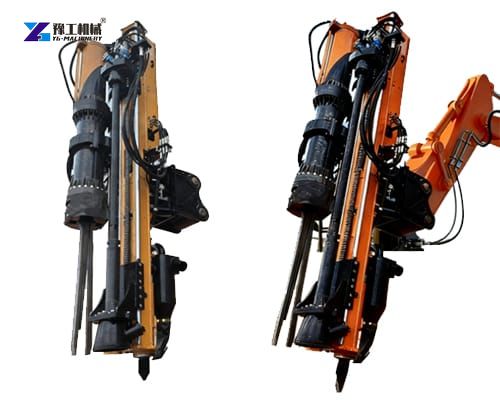
Suitable Applications for Rock Drilling and Splitting
Foundation Excavation
Hard rock can create major challenges during foundation construction. An excavator rock drill and splitter can be used to drill and divide rock formations so that excavation teams can progressively remove the material and prepare the required foundation area.
Road and Infrastructure Construction
Road projects frequently encounter rock layers during excavation and trenching. The drilling and splitting method can be used to break difficult sections into smaller pieces that are easier to handle with conventional excavation equipment.
Trenching in Hard Ground
Utility, drainage, and pipeline projects may require narrow or controlled excavation through hard ground. The ability to create drilling points and split material can be useful when conventional digging equipment has limited penetration performance.
Quarry and Rock Excavation
For quarrying and general rock excavation, controlled splitting can help contractors process large or resistant rock formations. The attachment can be integrated with suitable excavators to support different stages of material preparation and removal.
Demolition and Concrete Breaking
The same basic principle can also be relevant to selected concrete-breaking and structural removal applications. By creating controlled fracture points, contractors can work toward separating large sections into smaller pieces for subsequent handling.
Mining and Site Preparation
In mining-related and heavy construction environments, hard material can slow down conventional excavation. A suitable excavator rock drill and splitter can provide an additional method for preparing difficult areas before material removal.
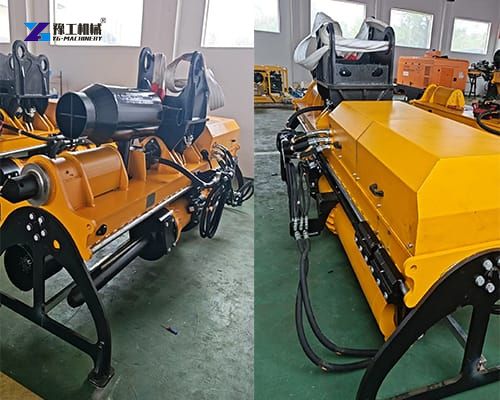
Why Choose an Excavator Rock Drill and Splitter?
Improved Excavation Flexibility
The attachment gives excavator operators another method for dealing with hard materials. Instead of depending exclusively on conventional digging or impact breaking, contractors can use drilling and splitting according to the conditions encountered on site.
Controlled Rock Breaking
Drilling followed by splitting provides a more deliberate approach to breaking material. This can be valuable for projects where contractors need to work within defined excavation boundaries or avoid unnecessary damage to surrounding areas.
Reduced Equipment Switching
Because drilling and splitting functions are combined into one solution, contractors may reduce the need to switch between different types of equipment during suitable projects. This can simplify jobsite organization and improve workflow continuity.
Designed for Large Excavators
The available models cover a wide excavator size range, making the product suitable for medium-to-heavy construction applications. The YG-130 is specified for 20T–36T excavators, the YG-152 for 36T–48T excavators, and the YG-210 for 48T–65T excavators.
Practical Performance for Heavy-Duty Work
The product range is designed for demanding applications where hydraulic power, drilling capability, splitting force, and working reach are important considerations. The largest listed model, YG-210, has a maximum splitting depth of 8,050 mm and a piling advance stroke of 2,300 mm, demonstrating its suitability for substantial excavation work.
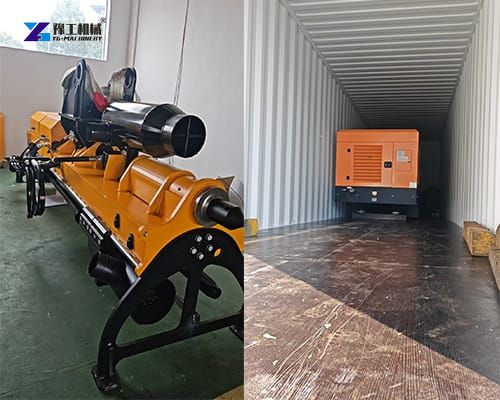
How to Select the Right Model?
Choosing the right excavator rock drill and splitter starts with checking excavator compatibility. Excavator operating weight, hydraulic pressure, hydraulic flow, attachment dimensions, and working requirements should all be considered before purchase.
The YG-130 is intended for 20T–36T excavators and can be considered for projects where a relatively smaller attachment configuration is appropriate. The YG-152 is designed for 36T–48T excavators, while the YG-210 is intended for 48T–65T machines.
The project itself should also determine the choice. Contractors working on deep excavation may prioritize splitting depth and working reach, while rock excavation projects may place greater importance on drilling performance and splitting force.