
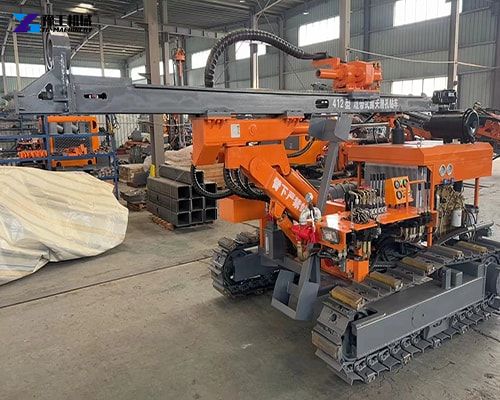
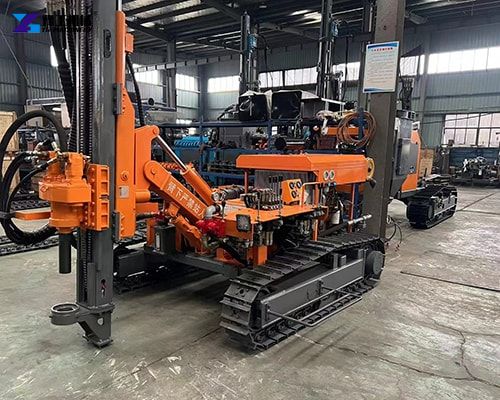
DTH drilling equipment, often abbreviated as down-the-hole rig, is a powerful and versatile machine designed for drilling holes in a variety of ground conditions. It utilizes a hammer mechanism located directly at the drill bit’s end, allowing for efficient penetration through tough rock formations. This type of drilling rig is widely used in mining, quarrying, construction, and geotechnical engineering projects. With their robust design and high drilling performance, DTH rigs have become an essential tool for professionals seeking reliable and productive drilling solutions.
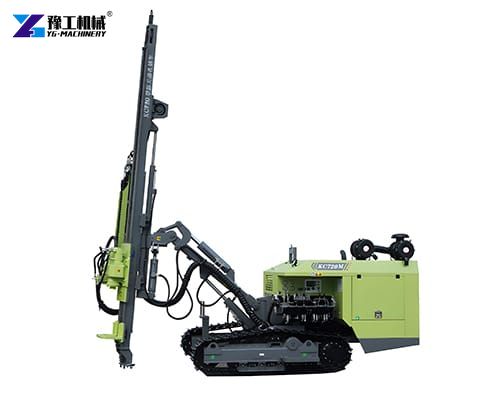
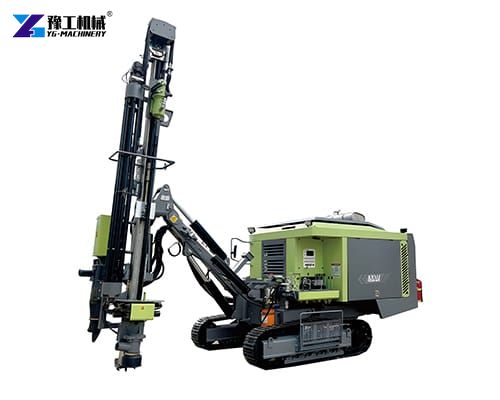
YG412 & YG420 DTH Drilling Equipment
| Model | YG412 |
| Drilling diameter(mm) | 50~203 |
| Rock hardness | f=6~20 |
| Drilling depth (m) | 30 |
| Walking speed(km/h) | 2.5 |
| Gradeability | 30° |
| Power type | Diesel |
| Fuel tank volume(L) | 85 |
| Hydraulic oil tank volume(L) | 188 |
| Weight(Kg) | 6300 |
| Dimension(mm) | 6600*2110*2500 |
| Air Compressor | |
| Model | S60 |
| Air compressor flow | 18m3/min |
| Air compressor pressure | 1.8Mpa |
| Air compressor power | 191Kw |
| Weight | 3560Kg |
| Dimension | 3660*2000*2590mm |
| Model | YG-420 |
| Weight | 5200KG |
| Dimension | 5900*2250*2700mm |
| Drilling hardness | F=6-20 |
| Drilling diameter | φ90-152mm |
| Depth of economical drilling | 20m |
| Rotary speed | 0-90rpm |
| Rotary torque | 5000N·m(Max) |
| Lifting force | 40KN |
| Method of feed | Oil cylinder+roller chain |
| Feed stroke | 3175mm |
| Traveling speed | 0-2.5km/h |
| Climbing capacity | ≤30° |
| Ground clearance | 500mm |
| Leveling angle of track | ±10° |
| Compensation length of beam | 900mm |
| DTH hammer | K40 |
| Drilling rod | φ76*2m+φ76*3m |
| Air consumption | 13-20m³/min |
| Maximum height of horizontal hole | 2750mm |
| Minimum height of horizontal hole | 350mm |
Advantages of Down the Hole Drilling Rigs
Down the hole drilling rigs offer numerous benefits that make them stand out from other drilling methods.
Firstly, their ability to drill deep holes with high accuracy and speed is unmatched. The DTH hammer delivers powerful blows to the drill bit, enabling it to break through hard rock layers efficiently. This results in faster drilling progress and reduced project timelines.
Additionally, DTH rigs are known for their excellent hole quality. The constant impact force ensures that the hole is straight and clean, minimizing the need for reaming or additional hole preparation.
Moreover, these rigs are highly adaptable to different ground conditions, including hard, abrasive, and fractured rock. They can also be used in various hole diameters and depths, providing flexibility for a wide range of applications.
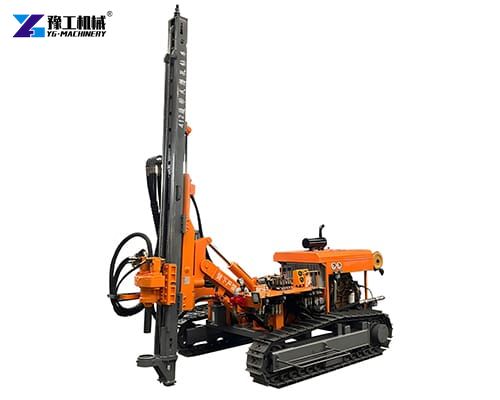
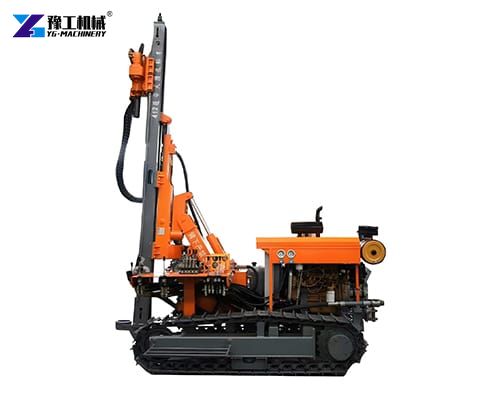
How Does Down the Hole Drilling Rigs Work?
The working principle of a down the hole drilling rig is based on the transfer of energy from the surface to the drill bit via a drill string. The rig’s compressor generates high-pressure air, which is directed down the drill string to the DTH hammer. Inside the hammer, the air pressure causes a piston to strike the drill bit repeatedly, creating a powerful impact force. This force is transmitted to the rock, causing it to fracture and break. The cuttings are then flushed out of the hole by the air exhaust from the hammer, ensuring a clear hole for the drill bit to advance. The rotation of the drill string, provided by the rig’s rotary head, helps to guide the drill bit and maintain a straight hole. This combination of impact and rotation allows the DTH rig to drill through even the toughest rock formations with ease.
Common Application Scenarios for Down the Hole Drilling Rigs
Down the hole drilling rigs find applications in a multitude of industries and projects.
- In mining, they are used for exploration drilling, blast hole drilling, and production drilling. The ability to drill deep and accurate holes is crucial for extracting minerals efficiently.
- In quarrying, DTH rigs are employed to drill holes for blasting operations, enabling the extraction of stone blocks for construction and decoration purposes.
- Construction projects also benefit from DTH drilling rigs, especially in foundation engineering, where they are used to drill holes for piles and anchors.
- Geotechnical engineering relies on DTH rigs for soil investigation, groundwater monitoring, and slope stabilization.
- Furthermore, these rigs are used in water well drilling, providing access to clean water in remote areas.
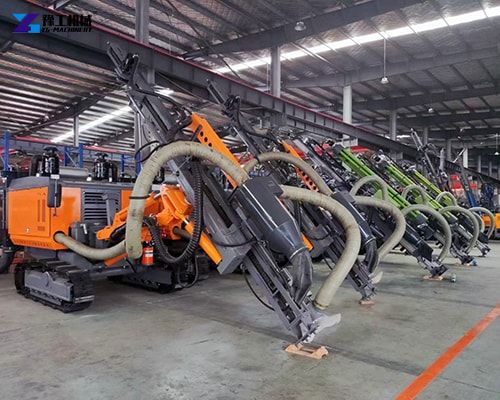
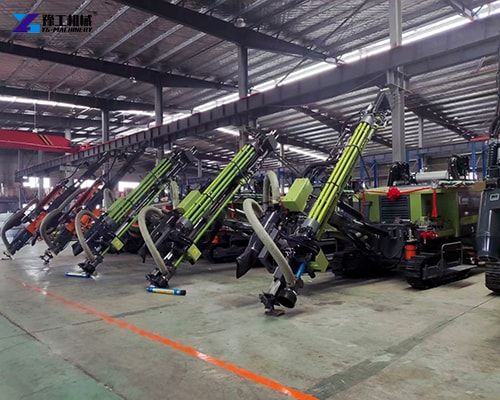
Key Points to Consider When Selecting a Down-the-Hole Drilling Rig
Choosing the right down-the-hole drilling rig is critical for the success of your drilling project. Several factors need to be taken into account to ensure that the rig meets your specific requirements.
- Firstly, consider the hole diameter and depth you need to drill. Different rigs have different drilling capabilities, so it’s essential to select one that can handle your project’s demands.
- The type of rock formation you will be drilling in is another important factor. Harder rocks require more powerful hammers and higher air pressures.
- Evaluate the rig’s power source, whether it’s diesel or electric, and ensure it is suitable for your working environment.
- Additionally, consider the rig’s mobility and transportation requirements, especially if you need to move it frequently between sites.
- Other factors to consider include the rig’s weight, dimensions, and ease of operation and maintenance.