
Down the hole drilling rig, often called a DTH drilling rig, is a powerful machine used for making deep holes in hard rock. It is one of the most important tools in mining, quarrying, and construction. The name comes from how it works. The hammer that breaks the rock sits right at the bottom of the hole. This is different from other drills that hit from the top. The down the hole drilling rig uses compressed air to drive a piston. This piston hits a drill bit very fast. The bit then crushes the rock into small pieces. The air also blows the rock dust up and out of the hole. This keeps the hole clean so the drill can go deeper.
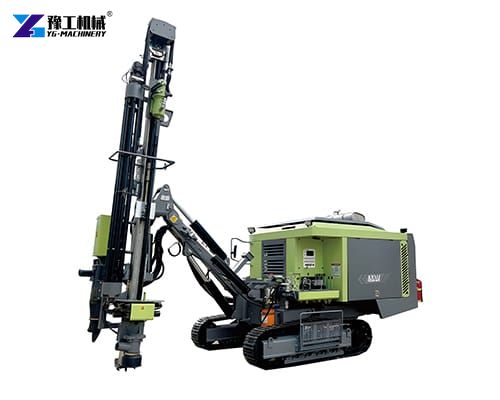
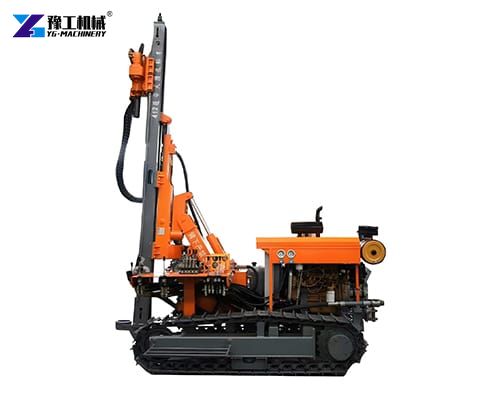
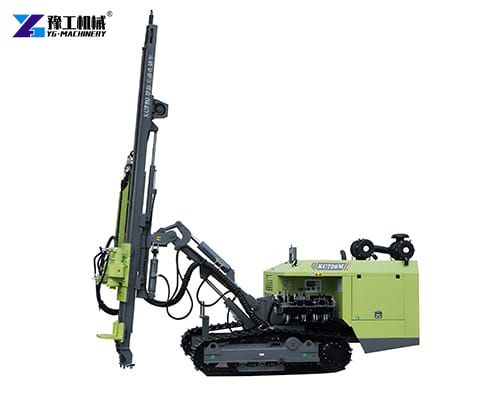
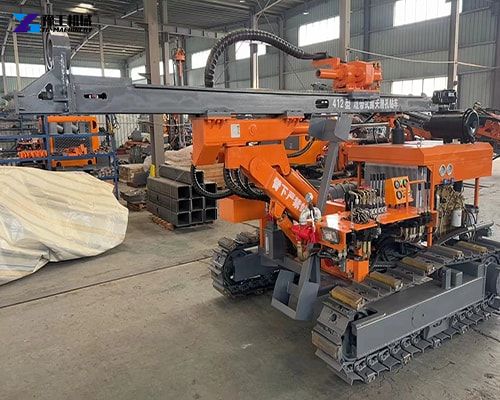
The down-the-hole drilling rig shown in this article is the YG412. It is a crawler-mounted diesel drilling machine for outdoor drilling work. Its design focuses on mobility, rock drilling, and practical field operation. It can be considered for projects where the ground is hard and the drilling team needs a mobile machine. For buyers, the most important question is not simply which rig has the highest power. The better question is whether the machine fits the actual drilling job. Rock type, hole purpose, hole size, drilling depth, working area, compressor capacity, transport conditions, and local service support all affect the final choice.
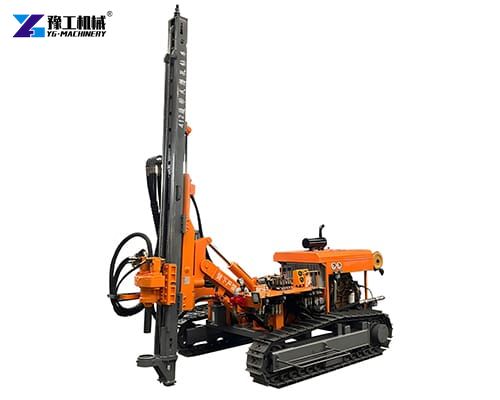
Parameters of Down the Hole Drilling Rig
| Model | YG412 |
| Drilling diameter(mm) | 50~203 |
| Rock hardness | f=6~20 |
| Drilling depth (m) | 30 |
| Walking speed(km/h) | 2.5 |
| Gradeability | 30° |
| Power type | Diesel |
| Fuel tank volume(L) | 85 |
| Hydraulic oil tank volume(L) | 188 |
| Weight(Kg) | 6300 |
| Dimension(mm) | 6600*2110*2500 |
| Air Compressor | |
| Model | S60 |
| Air compressor flow | 18m3/min |
| Air compressor pressure | 1.8Mpa |
| Air compressor power | 191Kw |
| Weight | 3560Kg |
| Dimension | 3660*2000*2590mm |
Advantages of a Down The Hole Drilling Rig
The down the hole drilling rig has many clear benefits.
First, it drills very fast. Because the hammer hits directly at the bottom, the energy goes straight into the rock. There is almost no loss of power. This means you get more work done in a shorter time.
Second, it makes straight and clean holes. The design of the down the hole drilling rig keeps the bit stable. This is very important when you need precise holes. In quarrying, straight holes help you get better blasting results. In construction, clean holes help with anchoring and water well drilling.
Third, the down-the-hole drilling rig works well in very hard rock. It can handle rock hardness up to f=20. This makes it ideal for mining and large foundation projects. Many other rigs cannot drill such hard rock well. But the DTH system does it with ease.
Fourth, the rig has a good walking speed of 2.5 km/h. You can move it around the site without much trouble. It also climbs slopes up to 30°. This helps you work on uneven ground. The diesel engine gives you strong power. The fuel tank holds 85 liters, so you can work for a full shift without refueling.
Finally, the down the hole drilling rig is stable and safe. The machine weighs 6300 kg. This heavy weight gives it balance during drilling. It does not shake or move off line.
How Does a Down-the-Hole Drilling Rig Work?
A down the hole drilling rig works with a simple but clever idea. The hammer is placed right behind the drill bit. This hammer is driven by compressed air. The air comes from a separate compressor unit. On our model, the S60 air compressor gives 18 m³ of air per minute. It pushes the hammer to hit the bit many times per second.
When the bit hits the rock, it breaks small pieces off. The air also flows through the bit. This air blows the broken rock pieces up to the surface. This keeps the bottom of the hole clear. It also cools the bit so it does not get too hot. The operator controls the speed and pressure from the cabin. They can see the hole and adjust the drill to match the rock condition.
One key part is the rotation mechanism. The rig turns the drill string slowly. This helps the bit crush the rock evenly. The rotation also helps the air lift the debris out. If the rotation is too fast, the bit wears out quickly. If too slow, the drilling speed drops.
The diesel engine powers the whole rig. It provides energy for movement and for the hydraulic system. The hydraulic system moves the mast up and down. It also feeds the drill string into the hole. All these actions work together smoothly. The operator does not need to do many manual tasks. This speeds up the work.
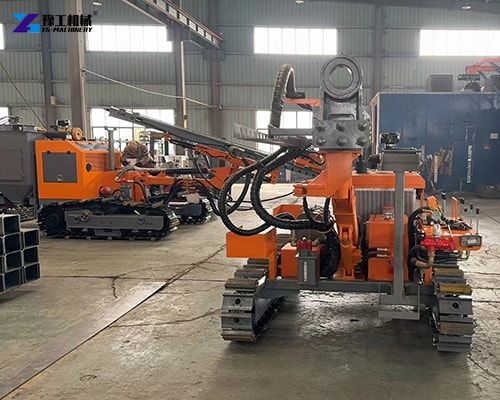
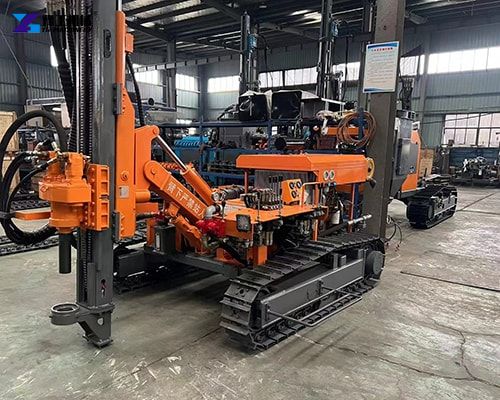
Where Is a Down-the-Hole Drilling Rig Used?
The down-the-hole drilling rig is a very flexible machine. You can find it on many job sites. The most common use is in quarries. Here, workers need to drill holes for blasting. The DTH rig makes holes of 50 mm to 203 mm in diameter. This range fits most blasting needs. The holes are straight, so the blasting works better and safer.
Another big use is in open-pit mining. Mines often have very hard rock. The down the hole drilling rig handles this well. It can drill down to 30 meters deep. This depth is enough for many mining steps. It helps break the rock so workers can get to the ore inside. The rig can move around the mine pit on its own tracks.
Water well drilling is also a good use. In areas with hard ground, a standard drill may not work. But the DTH rig can go through granite or basalt. It makes clean holes with a smooth wall. This is good for installing well casings. Many water well contractors keep a DTH rig for tough jobs.
Geothermal drilling is a growing market. People need deep holes for ground heat exchange. The down the hole drilling rig gives the depth and accuracy needed. It also works in crowded areas because it does not make much ground vibration. This is safer for nearby buildings.
In construction, you see DTH rigs for foundation piling. They drill holes for big concrete piers. The rig can go through soil and rock mixed together. This helps build strong supports for bridges or high buildings. In all these places, the down-the-hole drilling rig proves its value.
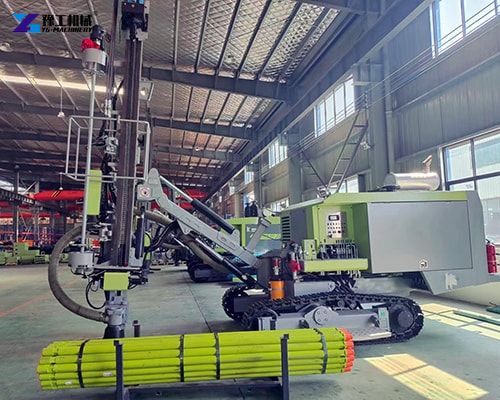
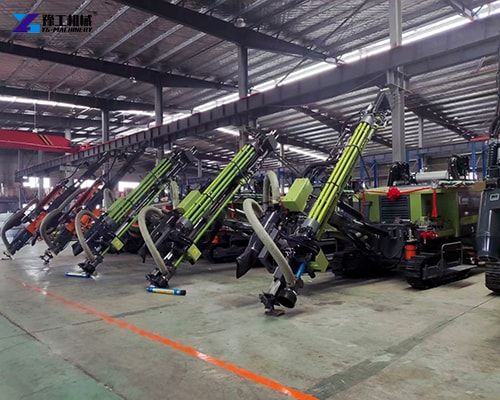
How to Choose the Right Down The Hole Drilling Rig
Choosing a down-the-hole drilling rig is a big decision. You need to think about your work carefully. The first point is rock hardness. Check your job site rocks. If they are very hard, choose a rig with high impact power. Our YG412 fits hardness levels of 6 to 20. This covers most hard rock needs.
Second, think about hole diameter. Do you need small holes or large ones? The down-the-hole drilling rig offers a range from 50 mm to 203 mm. Pick a model that covers your most common size. If you do many different jobs, a wide range is helpful. This gives you more flexibility.
Third, look at depth requirements. The YG412 goes to 30 meters. Is that enough for your projects? Some jobs need deeper holes. If yes, you may need a bigger rig. But for many quarry and construction jobs, 30 meters is standard.
Fourth, check the air compressor. The DTH rig needs good airflow. The S60 unit gives 18 m³/min at 1.8 MPa pressure. This is strong enough for consistent hammer action. When you buy, ask about the compressor matching. A weak compressor ruins the drilling speed.
Fifth, review the weight and size. Can your work site support a heavy machine? The rig weighs 6300 kg. It measures 6600 mm long, 2110 mm wide, and 2500 mm high. Think about transport and moving on site. Also check the slope capability. The gradeability of 30° is good for hilly areas.
Considerations for Purchasing a DTH Drilling Rig
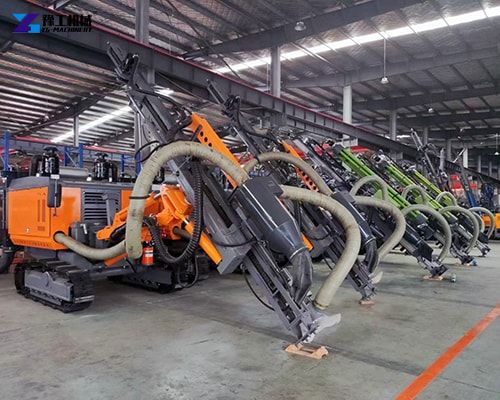
A down the hole drilling rig is a serious tool. It helps you work faster and safer in hard rock. But choosing the right one needs thought. You must match the rig to your rock type, hole size, and depth needs. The YG412 is a strong option for many sites. It comes with a reliable S60 compressor. Together, they give you a complete drilling system.
Check the machine carefully. Ask about support, parts, and training. If it is not fit to your requirements, we also provide other models and types of down-the-hole drilling machines. Please contact us to learn more details, and we will reply to you as soon as possible.