
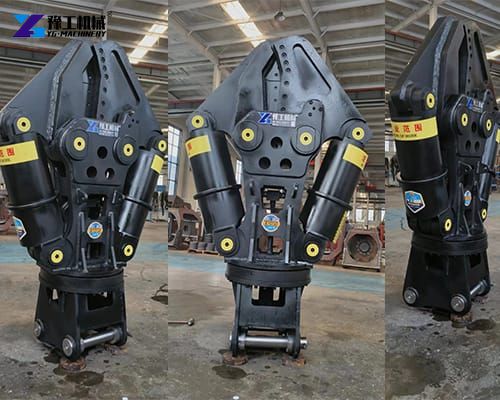
Excavator demolition shear is a hydraulic attachment designed to cut structural steel, reinforcing bars, metal beams, and other suitable materials during demolition and recycling operations. Mounted on an excavator, it converts hydraulic power into concentrated cutting force, allowing operators to dismantle steel structures and reduce scrap into manageable sections. Selecting the right excavator shear attachment involves more than comparing cutting force. Carrier compatibility, jaw opening, blade geometry, hydraulic flow, attachment weight, and maintenance access all influence real jobsite performance.
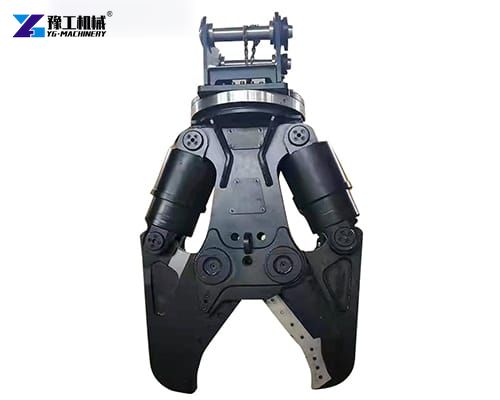
Parameters of the Excavator Demolition Shear
| Model | YG-180 | YG-290 | YG-390 |
| Applied Excavator | 12-18T | 20-30T | 30-40T |
| Weight | 1600kg | 2800kg | 3600kg |
| Driving Pressure | 300Mpa | 320Mpa | 320Mpa |
| Oil Flow | 250L/min | 280L/min | 350L/min |
| Opening | 600mm | 740mm | 800mm |
| Shearing Depth | 460mm | 550mm | 650mm |
| Shearing Force | 108T | 156T | 250T |
| Overal Length | 1900mm | 2207mm | 2700mm |
What Does an Excavator Demolition Shear Do?
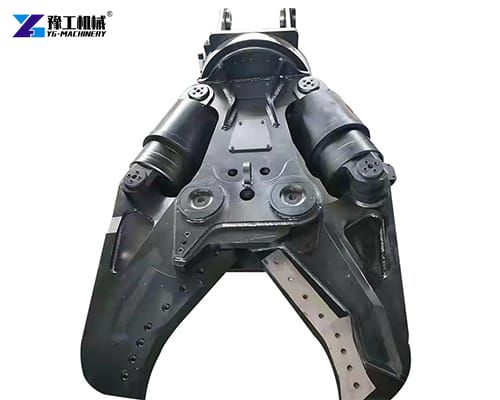
A demolition shear for excavator use mounts on the stick and uses the carrier’s hydraulic system to close a heavy jaw. The jaw combines a piercing tip, shear blades, and often a crushing tooth. The piercing tip cracks concrete or penetrates between steel plates. The blades then cut rebar, I-beams, channel, pipe, and other ferrous scrap. The result is material that can be sorted, loaded, and shipped more efficiently.
There are two main families: fixed demolition shears and 360-degree rotating demolition shears. Fixed models are simpler and lower cost. Rotating models let the operator position the jaw without repositioning the excavator, which saves time on bridge decks, high-rise demolition, and confined recycling yards. A rotating excavator attachment for demolition contractors often pays back faster on complex jobs because it reduces carrier movement and operator fatigue.
Core Technical Advantages of a Hydraulic Demolition Shear
Cutting performance depends on the interaction between hydraulic pressure, cylinder geometry, jaw leverage, and blade condition. No single specification can fully describe how an attachment will perform on every material.
1. High-Strength Structural Design
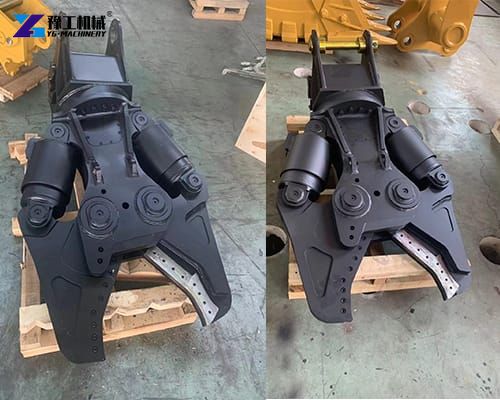
The main frame of the excavator demolition shear must withstand repeated cutting loads and the stresses created when material shifts inside the jaws. Reinforced structural sections, appropriately selected steel grades, and sound welding practices help maintain frame integrity during demanding work.
2. Replaceable Cutting Blades
Cutting blades are among the most important wear components. Their hardness, toughness, geometry, and installation accuracy influence cutting consistency and service life. A replaceable or reversible blade arrangement can simplify maintenance when supported by the specific model design.
3. Hydraulic Cutting Power
The hydraulic cylinder converts oil pressure into mechanical force, driving the movable jaw through its cutting stroke. Actual cutting force also depends on cylinder dimensions, linkage geometry, and the point where material contacts the blade.
4. Controlled Positioning Available
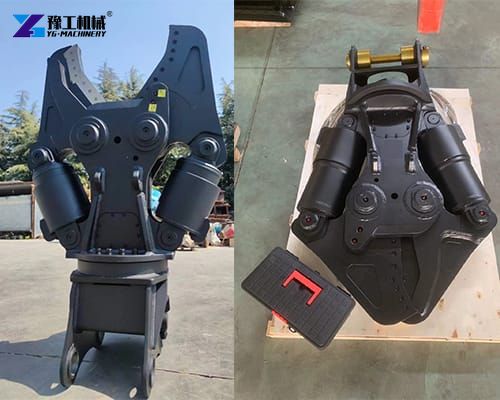
A 360-degree hydraulic rotation system allows operators to adjust jaw orientation without repeatedly repositioning the excavator. This is especially useful when dismantling steel frames, working around structural connections, or separating irregular scrap.
How Does a Demolition Shear Attachment Work?
The working process of the excavator demolition shear begins when the excavator supplies hydraulic oil to the attachment’s cylinder circuit. Pressure on the cylinder piston creates linear movement that drives the movable jaw toward the fixed jaw.
As the jaws close, the blades concentrate force along the material being cut. Once the applied force exceeds the material’s resistance at the cutting section, the steel separates.
After the cut, the hydraulic circuit reverses the cylinder movement to reopen the jaws. The operator then repositions the attachment for the next cut. On rotating models, the operator can adjust the cutting angle to suit the structure or scrap piece.
Cutting force varies along the jaw because the mechanical leverage changes with the contact position. Material held near the designed high-force cutting area may be easier to process than an equivalent section positioned near the jaw tip.
For this reason, operators should follow the manufacturer’s guidance on material positioning rather than relying exclusively on a maximum cutting-force rating.
Before operation, the excavator’s hydraulic flow, working pressure, return-line requirements, and attachment weight must be checked against the approved specifications. Excessive pressure or an incompatible hydraulic circuit can damage components and increase safety risks.
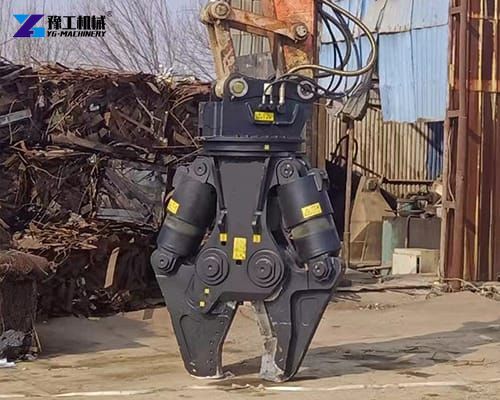
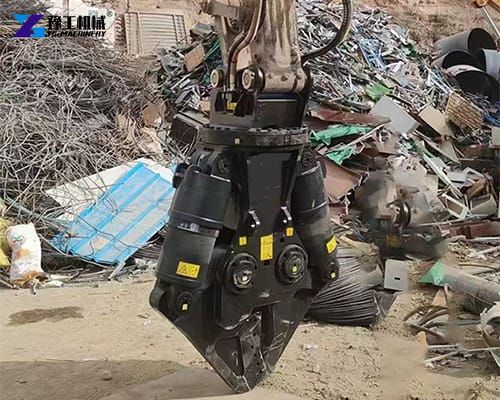
Configuration and Component Features of Excavator Demolition Shear
Hydraulic Cylinder Assembly
Cylinder bore, stroke, rod dimensions, seals, and operating pressure influence force delivery. The cylinder must operate within the attachment’s specified pressure and flow limits.
Main Frame and Jaw Structure
The frame supports the cylinder loads and transfers force toward the cutting edges. Jaw profile and opening dimensions determine which steel sections can be positioned safely and effectively. For frequent beam cutting, jaw depth and blade reach may matter as much as maximum opening.
Mounting Bracket and Pins
The mounting bracket must match the excavator’s attachment interface, including pin diameter, pin-center distance, and arm width. Incorrect dimensions can prevent installation or create unsafe loading conditions.
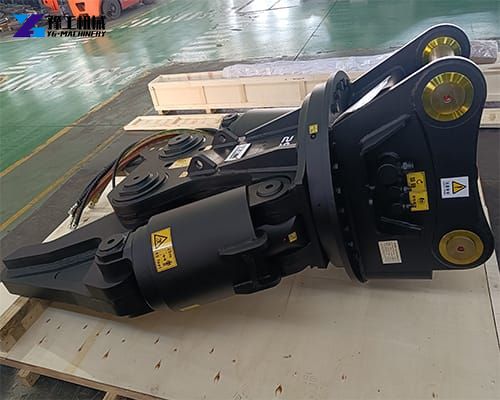
Hydraulic Rotation and Wear Protection
Rotating models require suitable hydraulic connections and a compatible oil supply. Hoses should be routed and protected to reduce abrasion, crushing, and interference during movement.
Main Applications of Hydraulic Demolition Shear Attachment
Building and Industrial Demolition
During structural dismantling, excavator demolition shear can cut steel columns, beams, bracing, and other suitable metal members. It helps separate reusable steel from mixed demolition debris and supports more controlled dismantling sequences.
Bridge and Infrastructure Removal
Selected steel components from bridges, industrial platforms, and infrastructure structures can be cut into sections for lifting, transport, and downstream processing. Structural stability and the demolition plan must be assessed before cutting load-bearing members.
Scrap Metal Recycling
Scrap yards use hydraulic shears to reduce oversized steel pieces into manageable lengths. Processing requirements vary with material thickness, section shape, contamination, and the desired output size.
Rebar and Construction Waste Processing
Suitable shear configurations can cut reinforcing bars and steel embedded in or recovered from demolition waste. Dedicated concrete demolition attachments may be more appropriate when the primary task is crushing concrete rather than cutting exposed steel.
Performance Comparison: What Should Buyers Evaluate?
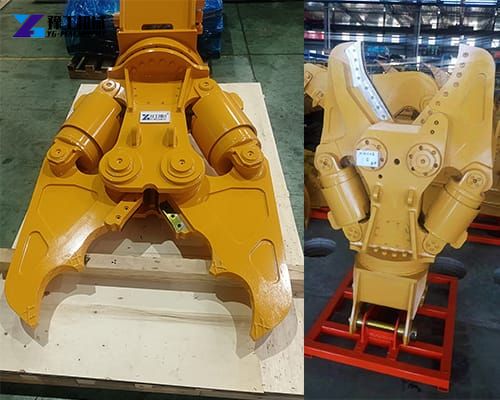
Comparing an excavator demolition shear by price or maximum cutting force alone can lead to an unsuitable purchase. A more useful assessment considers performance, compatibility, maintenance, and total operating cost.
Jaw Opening Versus Effective Cutting Depth
Maximum opening indicates the space available to receive material. Effective blade depth indicates the usable cutting area. Both dimensions should be compared with the actual beams, bars, or sections handled at the jobsite.
Attachment Weight Versus Carrier Stability
A heavier shear may provide greater structural capacity, but the excavator must be able to support it throughout the intended working range. Carrier lifting capacity, boom configuration, reach, and ground conditions should be considered.
Initial Price Versus Lifetime Cost
The purchase price is only one part of ownership cost. Blade replacement, seal maintenance, hydraulic repairs, downtime, shipping, and spare-parts availability can materially affect long-term value.
Frequently Asked Questions
Q1: What size excavator do I need for a demolition shear?
The required excavator size depends on attachment weight, cutting capacity, working reach, and hydraulic specifications. Provide the carrier model and material dimensions so the manufacturer can verify compatibility.
Q2: Can an excavator demolition shear cut steel beams?
Yes, a suitably rated shear can cut compatible steel beams and structural sections. Maximum section size depends on steel grade, section geometry, blade position, jaw opening, and available cutting force. Confirm the intended profiles with the manufacturer.
Q3: Is hydraulic rotation necessary?
Hydraulic rotation is useful when operators frequently change cutting angles or work around complex structures. A fixed or alternative rotation configuration may be sufficient for repetitive cutting in a consistent orientation.
Q4: What hydraulic pressure and flow are required?
Requirements vary by model, cylinder design, and rotation system. Obtain the specified operating pressure, oil flow, return-line requirements, and rotation circuit data before connecting the attachment.
Q5: How often should demolition shear blades be replaced?
Replacement frequency depends on cutting volume, material hardness, contamination, blade condition, and maintenance practices. Inspect cutting edges and fasteners regularly, and follow the manufacturer’s sharpening, rotation, and replacement instructions.